AI Team Structure: How to Design Roles and Teams for AI
Structure the team around the five human functions in the ORBIT Framework, then thin the coordination layer that only existed to route information by hand. Set people before process before tool.
An AI team structure drawn as an org chart is the wrong drawing.
The boxes tell you who reports to whom. They do not tell you which work belongs with a person, which work an AI system can take, or who is accountable when the two meet. Put AI into those boxes without answering the work question and you keep the old organisation underneath the new tools.
The team gets access. Someone runs a session. Curious people then do the real trials on personal accounts. They find ways to draft, summarise and prepare work, but the firm has not agreed how those experiments become a way of working. The approvals, handoffs and decisions remain where they were. A tool has changed; the team structure has not.
The useful drawing is a function map. It shows the human functions that must be covered around AI work, the work that can leave human weeks, and the decisions that still need an accountable person. Reporting lines come after that map. So do job descriptions and the choice of tools.
This is the design argument behind the ORBIT Framework: cover the functions, sort the work, and then redraw the structure. If you want to work through the practical sequence with your own team, read How to Structure a Team Around AI Agents, Step by Step.
What an AI team structure is
An AI team structure is the arrangement of human ownership around work that people and AI systems do together. It is not a separate department called AI, a list of tools, or a new reporting line for whoever happens to know the most about the software.
Start with an outcome the team is responsible for. Then follow the work needed to produce it. Some steps may be suitable for AI to carry out within agreed limits. Some become better when AI prepares an input and a person makes the decision. Other steps should stay with a person. The structure has to make those differences explicit.
That means a boundary is part of the design. Someone has to say what the AI may do, what a satisfactory result looks like, when a person must intervene, and what happens if the system cannot complete the work. Without those decisions, the team does not have a new operating model. It has a collection of individual shortcuts.
Ownership is also part of the design. Producing an answer is not the same as accepting it. Configuring a workflow is not the same as keeping it working. Asking people to use a system is not the same as making it acceptable to the people whose work will change.
The map should make those jobs visible before you assign them to titles. A title can carry more than one function. A function can be covered by people who have different titles. What matters is whether the function is present in the work, with an owner and something observable that shows it is happening.
You can test a proposed structure with a simple question: if this AI-supported piece of work fails tomorrow, can the team tell you who owns the outcome, who keeps it running, who changes it, who helps the team adopt it, and who brings in the needs of the people it serves? A reporting chart alone will not answer that.
The org chart was built for a routing job
Look at the work sitting between a decision and the people carrying it out. Someone gathers updates, turns them into a summary, takes the summary to a meeting, carries the decision back, and checks that it has been acted on. Another person assembles the same material in a different format for another audience.
Some of that work is judgement. Some is coordination. The distinction matters because routing information by hand does not have to remain a person's main job when the routing can be handled differently. Keeping the same chain of updates after introducing AI can preserve the old workload instead of removing it.
This is the structural argument in The Hourglass Collapse. The coordination layer thins when the work it used to carry is taken out of human weeks. The shape moves from hourglass toward lens. It does not move because a licence was purchased or because the word AI was added to a job description.
Do not treat that argument as an instruction to remove a layer before examining its work. A manager who routes updates may also resolve disagreements, develop people, make trade-offs and protect standards. Automating the update does not make those other functions disappear. They still need a home.
The useful question is not how many boxes you can delete. It is what each box actually does, which of those activities still needs human judgement, and where that judgement belongs once the routing work changes. A thinner chart without clear ownership can be less capable than the one it replaced.
There is a related question about the span of a manager's responsibility. If less time goes into collecting and relaying information, the job can change. That does not mean the same person can automatically take on more people without support. It means the span should be designed around the remaining work rather than inherited from the old reporting habit.
The Third Great Restructure follows that management question. Keep it connected to the function map: removing a handoff is useful only if the decisions, relationships and standards that mattered at that handoff are still covered.
Five functions, not five new job titles
The ORBIT Framework names five human functions: Orchestrate, Run, Build, Influence and Translate. The headings below describe the work each one holds. They are not a hiring plan, and the table is not a demand for a different person in every row.
| Function | Heading | What needs an owner |
|---|---|---|
| Orchestrate | Outcome Orchestrator | The outcome, the boundaries, and the route between human work and AI work. |
| Run | Operator | The live work: whether it completes, what fails, and what needs attention. |
| Build | Innovator / Builder | The changes that make the workflow work, and the conditions for handing it over. |
| Influence | AI Champion | The team's understanding, confidence and adoption of the way of working. |
| Translate | Stakeholder Liaison / Translator | The needs and feedback of the people the work serves, carried into the team and back out. |
Orchestrate is accountable for the result, not merely for getting an AI system to produce something. The Outcome Orchestrator decides the route the work should take and where a person must make a decision. That includes the limits of the workflow and what counts as an acceptable outcome.
Run makes the live arrangement dependable. The Operator notices when work stops, output changes, or a person has to keep rescuing a step that was supposed to run without them. A successful demonstration is not evidence that this function has been covered.
Build changes the system. The Innovator / Builder works on the workflow, its connections and its behaviour. Building also needs a handover: what has changed, what the Operator should watch, and how the team can stop or reverse a change that does not work.
Influence makes the change workable for people. The AI Champion is not simply the keenest user. The function includes helping colleagues understand the boundaries, making questions safe to ask, and bringing hesitation into the open instead of treating it as a failure of enthusiasm.
Translate connects the work to the people it serves. The Stakeholder Liaison / Translator carries their needs into the team and carries the team's work back in terms they can use. Output can improve technically while becoming less useful to a client or another team. Translation is how that difference gets noticed.
A person can hold several functions, but that should be a deliberate arrangement. Write down which functions they hold and where the time comes from. If a function is added to a job without anything else changing, it is easy for the urgent work of the old job to take its place.
Equally, naming a person in a row does not prove coverage. Ask what happens in an ordinary week that shows the function is active. Who reviews a failed run? Who accepts a change? Who brings a user's objection into the design? Those are more useful signals than the title printed beside a name.
Where each part of the design lives
The function map is one part of the design. It should not be asked to answer every question about AI work. Keep the different decisions separate enough that a team can see what is being decided, while making the connections between them explicit.
The work sort belongs in Replace, Augment and Refuse. That is the job of The Co-Pilot Zone. Replace means the work can be handled by AI within a defined boundary. Augment keeps a person's judgement in the route, with AI supporting it. Refuse makes the boundary where AI should stay out explicit.
Do that sort at the level of work, not whole job titles. A role can contain activities in different zones. Calling the whole role replaceable conceals the judgement and relationships inside it. Calling the whole role human-only can conceal routing work that no longer needs to consume a person's week.
Function coverage belongs in ORBIT. Once you know the route the work will take, the map tells you which human responsibilities must be present around it. The same workflow can need all five functions without needing a new department to supply them.
The shape of the organisation follows the coordination work. Use the Hourglass Collapse argument to examine what changes when manual routing is removed. Keep the remaining decisions visible. Otherwise the chart can look simpler while people spend more time finding out who is allowed to act.
Management spans follow the redesigned work. The question about who supports whom belongs alongside the management argument in The Third Great Restructure. It comes after understanding what managers will still do, not before.
The operating arrangement belongs with the team. That is where ownership, handoffs and feedback have to work in practice. The writing on Building AI-Augmented Teams follows those questions across teams rather than treating the tool as the unit of design.
These are different views of the same work. A team should be able to follow a line from the outcome, through the work sort, to the functions that own it, and then to the reporting and management arrangement. If that line breaks, buying another tool will not join it up.
How to design the roles you already have
Set people before process before tool. Start by understanding the people, judgement and relationships the work depends on. Then make the route the work takes explicit. Choose the tool once you know what that route needs, rather than asking the team to reorganise around a feature it has just seen demonstrated.
Start with the work, not the proposed title
Choose a piece of work the team can describe from beginning to end. Name the outcome and the person who accepts it. Follow what happens between the request and the accepted result, including the waiting, checking and clarification that do not appear in the neat description of the process.
Ask the people doing it where they already use AI. The point is to understand the actual route, including the trials that happen outside the formal workflow. A conversation that starts by looking for blame will give you a less useful picture than one that asks what people are trying to make easier and what they are still checking by hand.
Sort the activities before redrawing the role
Put the activities into Replace, Augment and Refuse. Be specific about the input and the point at which a result is accepted. If a draft can be prepared by AI but a person must approve the substance, make that distinction visible rather than labelling the whole activity automated.
Do not count a step as removed while someone still has to reconstruct its inputs, watch it throughout, or redo the output. Those activities are part of the route. They belong on the map, even if they make the proposed automation look less impressive.
Map the functions onto the people
Now put the five ORBIT functions beside the work. Name who owns each function for this outcome. Allow the same name to appear more than once, but do not use that as a way of avoiding a capacity decision. Several functions on a page still mean several kinds of work in someone's week.
Look for the function that is assumed to happen because somebody has a broad title. A manager is not automatically covering Orchestrate. A developer is not automatically covering Run. A keen user is not automatically covering Influence. The activity and its signals have to support the assignment.
Write the role around its new responsibilities
For each person whose work changes, describe what they now own, which decisions they can make, where they need another person's judgement, and what they no longer have to do. Keep the description tied to the outcome rather than to a particular tool interface.
Do not add AI responsibilities to the bottom of an unchanged list and call the role redesigned. If someone is expected to operate a workflow, help colleagues use it, and keep building improvements, decide what time those functions receive and which previous responsibilities move or stop.
Make the handoffs observable
A handoff needs more than a name at each end. The person receiving the work needs to know what is ready, what has been checked, what remains uncertain and what would make them send it back. That applies whether the previous step was carried out by a person or by AI.
Keep a route for exceptions. The team should know how to stop a workflow, who can decide what happens next, and how the decision reaches the person affected. If an exception always travels through a private conversation with the person who built the system, the work still depends on that person's availability.
Redraw reporting lines after the map
Only now ask what the chart needs to look like. Some reporting relationships may remain useful. Others may have existed mainly to carry work that is no longer routed by hand. The map gives you a reason to change a line, rather than a preference for a fashionable shape.
Use How to Structure a Team Around AI Agents, Step by Step for the practical sequence. The test is not whether the revised chart looks more modern. It is whether the team can explain how the outcome is produced and who holds each of the functions that make it possible.
What you do with the map
The first use of the map is to find a responsibility that has no real owner. Do not turn every gap into a hiring request. Some gaps need a clearer decision, some need time protected in an existing role, and some need work removed before the owner can take them on.
Pick a change the team can observe in the work. That might be an acceptance decision becoming explicit, an Operator taking over a live workflow from its Builder, or a stakeholder's feedback reaching the team before a change is treated as finished. Name the change and look for evidence that it happened.
Keep the distinction between a demonstration and an operating arrangement. A demonstration can show that a system produces a useful answer. It cannot, on its own, show that someone will keep it running, that colleagues understand when to use it, or that the people it serves can get a problem corrected.
Use the same map when the work changes again. A new client requirement, a different input or a change to a tool may move the boundary between human judgement and AI work. Revisit the owners and the handoffs rather than assuming the original assignment still covers the new route.
A useful review looks at the outcome and the work needed to obtain it. Ask what people still prepare by hand, what they must check, which exceptions keep returning, and where a decision waits for the same person. That is how you see whether the coordination layer has actually become thinner or has merely moved into private messages.
Keep feedback attached to the function that can act on it. A running problem needs an Operator and, when a change is needed, a Builder. A disagreement about what good output means belongs with Orchestrate and Translate. A team that does not understand the boundary needs Influence, not another announcement that the software is available.
The map is not a maturity score or proof that the firm has finished adapting. It is a way to make the ownership of the work discussable. Its value comes from showing a missing function, an overloaded owner or an unnecessary handoff clearly enough that somebody can change it.
If the firm already has tools and training but the work still runs the old way, take the Firms Like Yours: AI Check. Use the result as a starting point for deciding where the work has stopped moving, then return to the map with a specific change to make.
FAQ
How should a team be structured for AI?
As a function map, not as a new branch of the org chart. Cover the five headings in the ORBIT Framework, sort the work into Replace, Augment, and Refuse, and thin the coordination layer the sort exposes. Set people before process before tool. The reporting lines are what you redraw after the map, not before it.
What roles does an AI team need?
Functions, not a shopping list of titles. The headings are Outcome Orchestrator, Operator, Innovator / Builder, AI Champion, and Stakeholder Liaison / Translator. The long version is the ORBIT Framework. A team needs each of those present, with signals you can point at. It does not need a title for each, and a title that matches none of them does not count as coverage. Naming the function by the job title is the anti-pattern the role file names first.
Will AI change our org chart?
Yes, if the chart's middle exists to route information. That routing is the job AI takes first, and the coordination layer thins. The shape moves from hourglass toward lens. The chart does not change because a tool was purchased. It changes when the Replace work is actually taken out of human weeks, and when the five functions have owners.
Who should own AI in a 50-person company?
The Outcome Orchestrator is the accountable owner for the outcome, and for the route between human work and AI work. The other functions still have to be covered. A box labelled AI is not that owner.
Articles in this topic
- How to Set Up an AI Team in a 20-200 Person Company
In a 20-200 person company, set the team up from the people you already have. People before Process before Tool. Name the work before any new licence.
- How to Manage a Team With AI: What to Hand Over, What to Keep
To manage a team with AI, sort each workflow first. Hand over coordination and routine writing. Keep judgement. Refuse where the risk outweighs the gain.
Structure the team around the work, not the tools: the five ORBIT functions, the coverage rule, and the three AI team structures that fail.
The Chief AI Officer owns how the company gets redesigned around AI, not which tools it buys. The job, the fractional version, three signals.
Five phases, the tool decision last, an exit written in. The plan after the diagnosis, with a week-one checklist to run without a vendor.
Middle management is two jobs in one title. AI takes the routing half. Cut the layer as one headcount line and you delete both.
Vendor readiness assessments measure what vendors sell. These 12 questions measure whether your org chart, handoffs and decision rights can absorb AI.
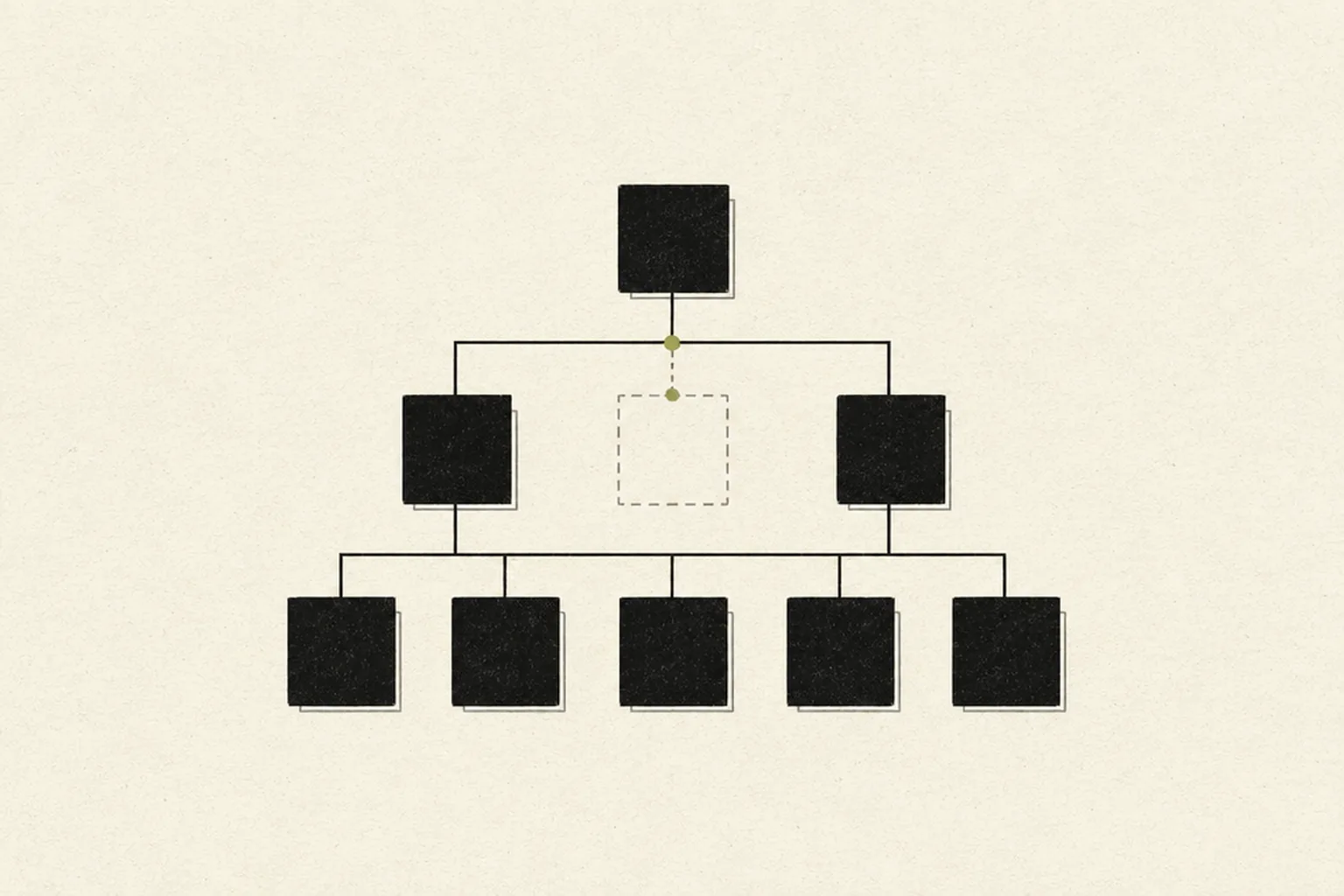 Why Companies Abandon AI Assistant Rollouts: It's the Org Chart
Five different post-mortems, one cause. You bought a tool and kept the structure, and the structure decides whether the tool becomes how work happens or something people do on the side.
 The Apprenticeship Crisis: How AI Removed the Rung People Climbed
The bottom rung was never only work. It was the training ground. Automate it and you remove the mechanism that manufactures the seniors you will be trying to hire in 2032.
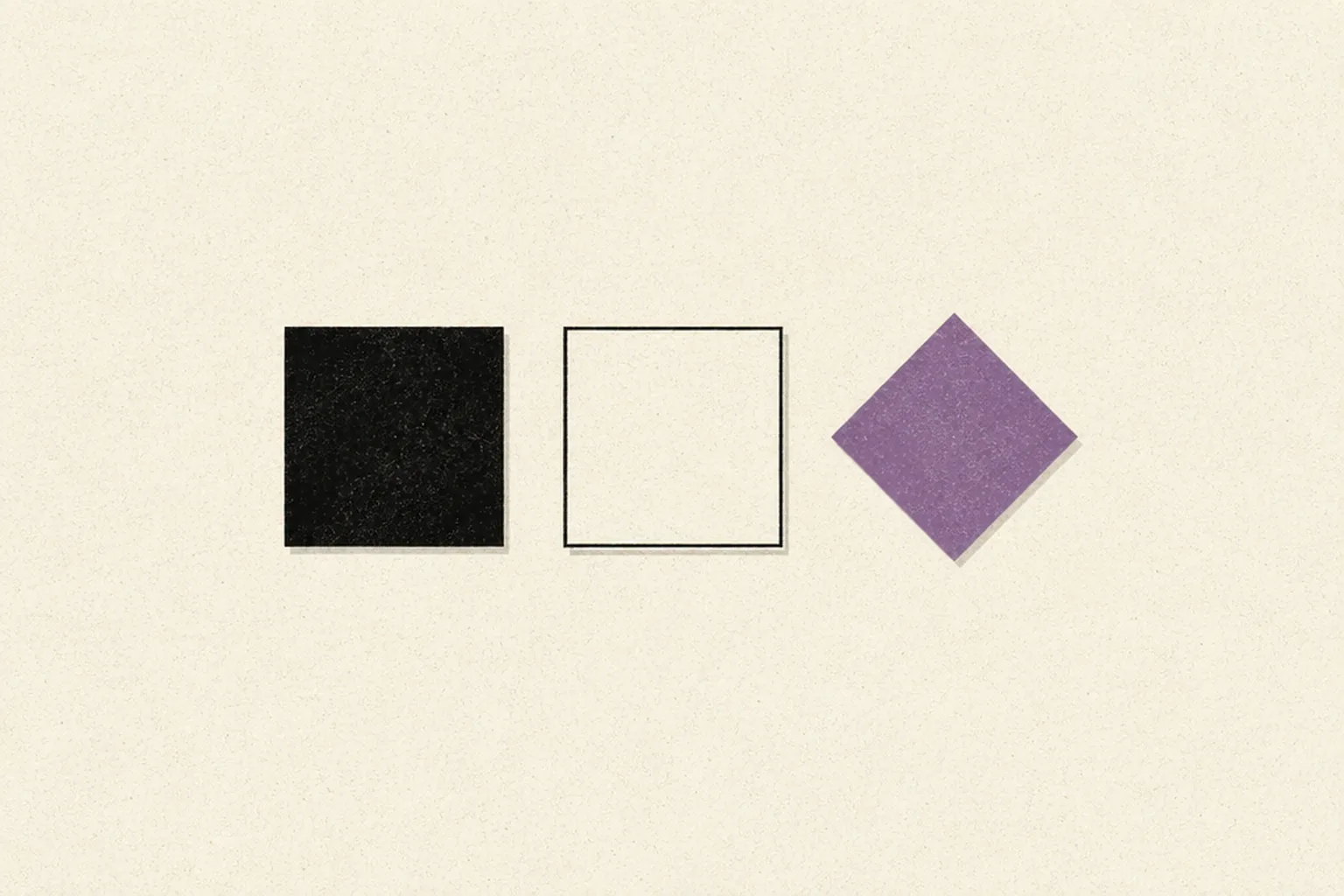 The Co-Pilot Zone: Replace, Augment, or Refuse
Every workflow in your company belongs in one of three zones. Almost nobody makes the call out loud, so everything defaults to the middle one, the only answer that requires nothing to change.
 The Third Great Restructure: How Many Managers You Actually Need
Management is two jobs sharing one title. AI is automating one and making the other harder. Cut the layer as a single budget line and you delete both.
Every AI-augmented team needs five functions covered: Orchestrate, Run, Build, Influence, Translate. Here is the full framework.
The bottom layer of white-collar work is being automated. Middle management was always load-bearing on it. Here is the org chart that comes next.


