One brain, many doors

The skill I am not allowed to run
Once the hire could write its own routines, it needed limits on what those routines could touch. One of those limits is aimed at me.
My brain has a skill that drafts marketing posts about client work.
It is blocked. Not broken... blocked, by the system itself.
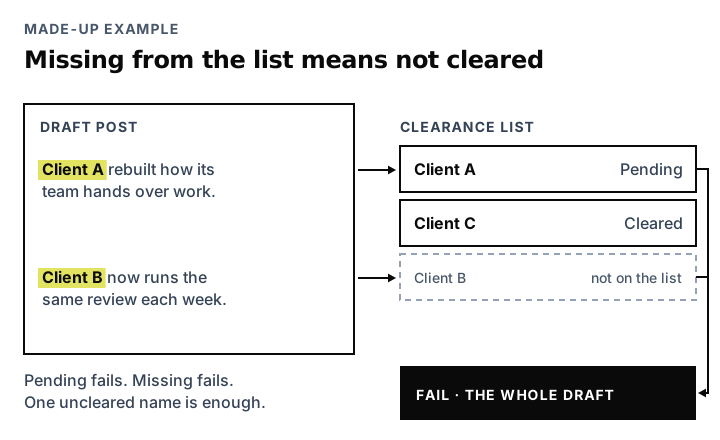
Every one of those posts would need a client's name. The brain keeps a short list of who has cleared what, and no client has yet cleared being named in public. One request is at Pending. Until a name on that list reads Cleared, the skill that writes those posts stays recorded as blocked.
I built the skill. I wrote the list. And the gate holds me to it, exactly as it would hold anyone else.
A brain that only I use can be one room. A brain that drafts things other people will read, and that other people might one day help run, needs doors. Different doors, with different locks.
The idea
One brain, many doors, each locked differently.
Reading and changing are different permissions. Most second brains treat them as one: if you can open the folder, you can edit it. That works for a notebook. It breaks the moment the brain holds client work, drafts things for the public, or has more than one person near it.
So the brain has three kinds of door. One lets people read and act. One lets a small number of people change what the brain believes. And some doors stay shut between rooms entirely.
How it works
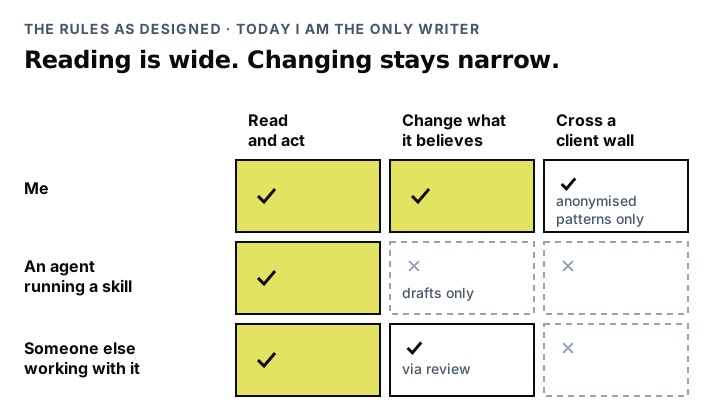
Door one: read and act. Anyone working with the brain can read it and use it. They can ask it questions, run a skill, get a draft. Reading is cheap and safe, so it is wide open.
Door two: change. Changing what the brain believes is narrow. The rules, the learned patterns, the procedures and my own preferences can only be changed by approved people, and every change goes through review. Everything else an agent produces lands in drafts, never in the brain itself. A draft is a suggestion. The brain is the record.
Door three: the walls. Client work lives in its own rooms. What I learn inside one engagement does not leak into another, or into anything public. Learning is allowed to cross a wall only one way: stripped of everything that identifies where it came from, and only into the shared method notes. Patterns cross. Names, numbers and deal details do not.
The clearance list. This is the lock on the front door, the one facing the public. It is a short table: every client, and whether they have said yes to being named. The default for anyone, including anyone missing from the list, is "not cleared". Before anything external ships, the critic from Chapter 7 checks every name in the draft against that list. One uncleared name is enough to fail the whole draft.
                   PUBLIC
                     │
          ┌──────────┴──────────┐
          │  CLEARANCE LIST     │  no "yes" on file = no name
          └──────────┬──────────┘
                     │
   ┌─────────────────┴─────────────────┐
   │          THE BRAIN                │
   │   rules · patterns · procedures   │  change door: approved people only,
   │                                   │  every change reviewed
   └───────┬───────────────────┬───────┘
           │ anonymised        │ anonymised
           │ patterns only     │ patterns only
   ┌───────┴───────┐   ┌───────┴───────┐
   │ CLIENT ROOM A │ ▓ │ CLIENT ROOM B │   the wall: nothing crosses sideways
   └───────────────┘   └───────────────┘

   read-and-act door: open to everyone working with the brain
The result is a brain that more people can use without more people being able to bend it. Reading scales. Changing stays careful.
What I learned the hard way
Default to no. The clearance list treats anyone missing from it as not cleared. A gate that defaults to yes only catches the names you remembered to add.
Put the rule where the checker reads it. The confidentiality walls are not a paragraph in a policy file. They are a check the critic runs on every external draft, so a leak fails the draft instead of waiting for someone to remember the policy.
The gate blocks me too. The clearance list does not care who wrote the draft. Today it blocks every client reference I have, because no client has yet cleared being named in public. That is the gate doing its job. The fix is to ask clients, not to loosen the lock.
Try it
The honest limit
The multi-person rules are built. I am still the only writer. Other people contribute by talking to me, and I record what they said, in their words, with their name attached as the source. So the change door has been designed and tested on one person... and plain files only give you coarse permissions, so per-room access for a real team needs more than a folder.
Read this next
More rooms, more doors, more files pointing at each other. Past a few hundred files, one edit can quietly break others, and nobody sees it happen.
Next... The map, for when the brain gets big enough to lose track of itself. Or go back to The critic, the reviewer that holds the clearance list.
Building one of these? You don't have to do it alone.