Why I built it

The hire who forgets
Every morning I opened a fresh session with the AI and explained my business again. The clients. The shorthand. The decision from last week, and the reason behind it.
I run three ventures, largely on my own, from Dhaka. Half my calls switch between Bangla and English mid-sentence. That is a lot to re-explain before the day has started.
The morning it stopped being an annoyance, I was drafting a follow-up to a client. The previous afternoon, I had walked the AI through that client's whole situation: who signs off, and what not to say. The new session knew none of it. The draft read fine, and it could have gone to anyone. So I started typing the background in again, the same sentences as the day before... and stopped halfway, because I would be typing them again the day after.
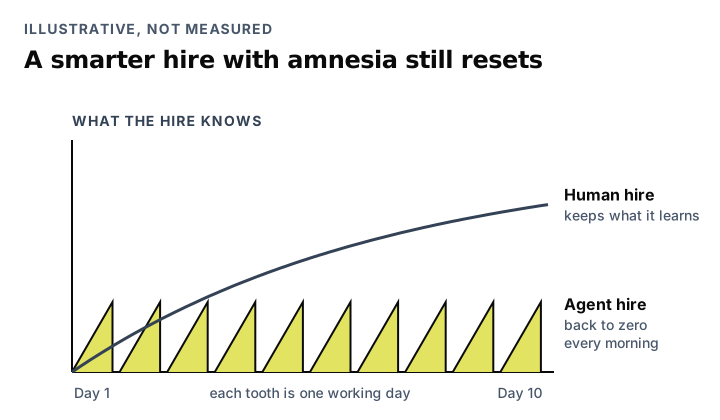
After that, I could see the shape of the problem. I had hired the best person in the world for my job. On day one they knew nothing about my business, and by tomorrow they had forgotten today.
A human hire knows nothing on day one either. But a good one sits in on enough of your calls and starts finishing your sentences. This hire never reached week two. Every morning was day one again.
Most of what the hire needed was never written down anyway. It lived in my inbox, my calls and my head.
I thought the fix was a smarter model. Each new release would surely remember more and need less briefing. I was wrong about where the problem lived. A smarter hire with amnesia still has amnesia.
So I stopped looking for a smarter AI and built it a memory that earns what it believes.
The idea
Intelligence was never my bottleneck. Memory was, and the memory has to earn what it believes.
"Earn" is the word that matters. Plenty of tools will remember everything you tell them. That's a pile, and a pile gets worse as it grows, because a wrong note from three months ago sits next to a right one from yesterday with equal weight.
The memory I wanted works the way a good colleague does. It writes things down. It notices when something comes up again. It only treats something as true once separate sources agree. And when it's wrong, it gets corrected in a way that sticks.
How it works
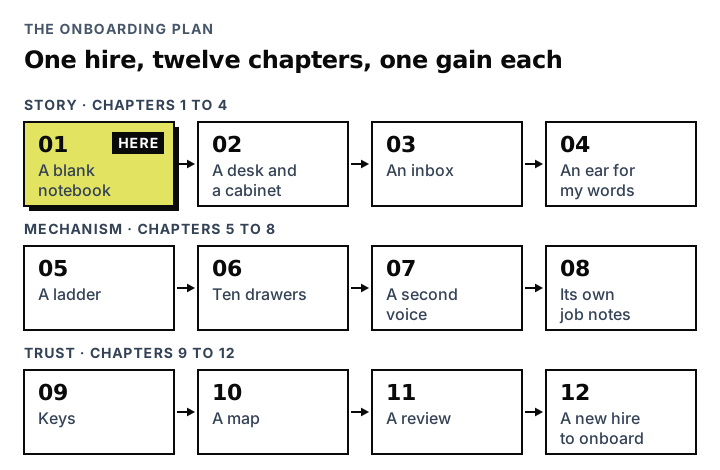
This guide is the hire's onboarding. Each chapter gives it one thing it was missing, in the order the problems showed up. The whole system is five plain ideas stacked on each other.
A filing cabinet. Everything the business knows lives in plain files I can open, read and change. Originals are kept apart from what's been checked. The AI reads the same cabinet every morning, in the same order.
A night shift. A cabinet only holds what someone puts in it. Calls, email, calendar and documents get captured and filed, so the half of the business that lives in inboxes and heads actually makes it in.
A ladder. This is the "earns" part. A new observation is watched. Seen again, it's suggested, and I check it. Only after it shows up in separate places does the system apply it on its own.
A critic. Nothing leaves the building without a reviewer whose instruction is: your job is not to be nice. It looks for why the draft will fail.
Doors and a map. Everyone can read the brain, only approved people can change it, and client work stays walled off. A map shows what any change will ripple into.
   your work: calls, email, calendar, documents
                     │
                     ▼
            ┌─────────────────┐
            │ THE NIGHT SHIFT │   files what got left on desks
            └────────┬────────┘
                     ▼
            ┌─────────────────┐
            │ THE FILING      │   plain files, originals kept
            │ CABINET         │   apart from what's been checked
            └────────┬────────┘
                     ▼
            ┌─────────────────┐
            │ THE LADDER      │   Watch → Suggest → Auto-apply
            └────────┬────────┘
                     ▼
            ┌─────────────────┐
            │ THE CRITIC      │   ship / rewrite / escalate
            └────────┬────────┘
                     ▼
             work that leaves the building
                     │
                     └──► every correction goes back into the cabinet
That last arrow is the point. Each call it hears and each draft it critiques makes the next one a little sharper. That's what I mean by compounding.
What I learned the hard way
I was making my clients' mistake. One of the rules my system earned, all the way to the top rung, reads: "Buying a better tool never fixes a team that keeps failing the same way." I was doing exactly that with AI models. Upgrade, re-brief, forget, repeat.
If the run wasn't logged, it didn't happen. A memory has to include what the system itself did, and who asked it to. Every run now writes one line to a log with a name on it. Without that, I couldn't tell what it had learned or from where.
Measurement is my weakest layer. My own assessment of the system found "no way to tell whether an output got better as opposed to longer." I'd rather tell you that now than have you find it in Chapter 11.
Try it
There's no repo for this chapter. It's the why. If you want to start building today, the house comes first:
brain-starter... a plain-file brain with three kinds of memory, a load order and a run log.Open the repoThe honest limit
This is one person's system. The rules for a team are designed, but I'm still the only one who writes to it. And a memory that earns what it believes is slower to believe anything... which is the point, and also the cost.
Read this next
A memory needs somewhere to live. So the first thing the hire got was a desk, and a cabinet worth opening.
Next... The filing cabinet: why a faster assistant doesn't help if the cabinet is chaos.
Or skip to the best part: The glossary that learns my words.
Building one of these? You don't have to do it alone.