What's worth tracking

Ten places to learn, and nine went quiet
Rule 2 of the ladder is the hard one. Before the hire could believe anything about my business, I had to decide what counts as a separate source.
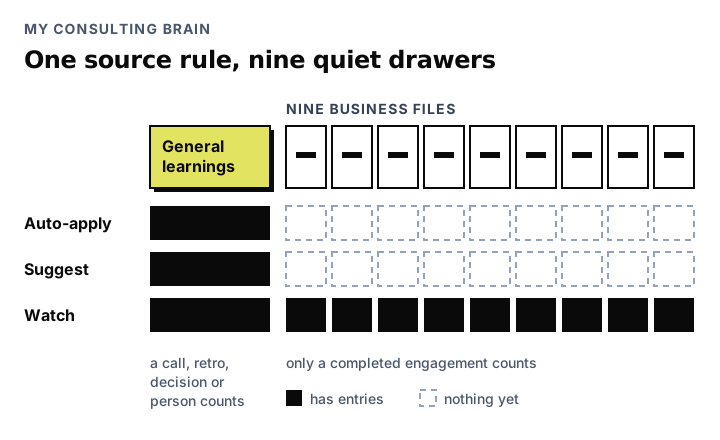
When I built the business version of the ladder, I did not give it one notebook. I gave it ten.
One file for general learnings. Then one file each for the parts of my consulting work I wanted the brain to get better at over time: how teams are shaped, which processes break, which measures told the truth and which were vanity, and so on. Each file had its own ladder.
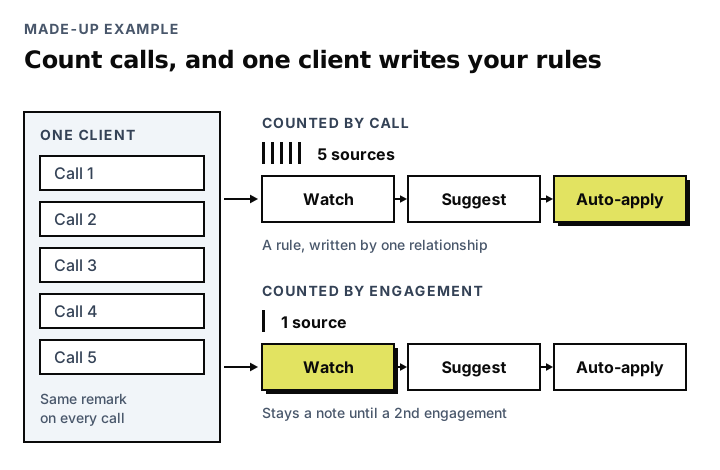
For the glossary, the source question was easy. A different call is a different source. For business patterns, that answer falls apart the moment you test it. One talkative client across several calls would hand the brain several "separate" sources, and a single relationship could promote a rule all by itself. That is parroting with extra steps.
So I set the bar where it was honest. For nine of the ten files, a separate source is a different completed engagement. The same client saying the same thing twice does not count twice.
The result was immediate, and a little humbling. Nine of the ten files went quiet. With the work I have finished so far, they structurally cannot promote anything. I chose honest silence over fast noise... and I still think it was the right call.
The idea
You decide which parts of your business are worth watching, and each one gets its own rules for what it is allowed to believe.
The ladder is the engine. This chapter is about where you point it. A brain that tracks everything learns nothing in particular. A brain that tracks a few things you care about, each with a clear idea of what counts as evidence, can get sharper every month you feed it.
I call each of those tracked things a substrate. You do not need the word. You need the choice.
How it works
Start with the part of the business you already argue about. In marketing, that is usually your ideal customer: who they are, where they live, how they buy. Each of those becomes something the brain tracks and learns about, separately, with its own evidence.
Every tracked part gets one file, and every file carries the same few things:
- What it is. A short, stable definition that rarely changes.
- What you can see. The signals that tell you something about it, in calls, emails, deals or reports.
- What has been seen. Each observation, dated, sourced, and sitting on its rung of the ladder.
- What broken looks like. The patterns that show this part of the business going wrong.
- How it changes. What tends to shift as a team or customer matures.
- Its own growth log. A dated, newest-first record of every promotion, demotion and correction.
Then each file gets its own rules. This is where the design lives.
Who must approve a change. Some files should only move when one specific person signs off. Some need a group decision. Some follow a longer process of drafting, reviewing and deciding. And some can learn on their own, the way the glossary does, from repeated evidence alone.
How much evidence it needs. The default ladder is one source to watch, two to suggest, three to bind. A file about pricing might want a stricter bar than a file about which subject lines get opened.
What counts as a separate source. The hardest choice of all. A different customer account? A different deal? A different completed project, counted only once its retro is written? Get this wrong and the brain will promote noise with total confidence.
                     YOUR BUSINESS
                          |
     +--------------------+--------------------+
     |                    |                    |
 IDEAL CUSTOMER     SALES OBJECTIONS    DELIVERY PROCESS
 source = a         source = a          source = a finished
 different account  different deal      project, after retro
 approver = you     approver = team     approver = you + lead
     |                    |                    |
  WATCH > SUGGEST > AUTO-APPLY   (each file runs its own ladder)
     |                    |                    |
     +---------> general learnings <-----------+
        (a pattern that turns out to be general bubbles back up)
You do not have to design this alone. The repo ships a short guide to choosing what to track. Hand it to your AI and let it interview you: what your business does, which parts are worth watching, and a proposed source definition for each file, for you to accept or change. The decision stays yours. The blank page does not.
What I learned the hard way
Separate has to mean separate. The design question that matters most is this one: if a client says the same thing on five calls, is that five sources or one? Count calls, and one client could write my rules for me. Count completed engagements, and the brain gets quieter but honest. I chose quiet, and I would make the same trade again.
A file nobody can promote is still worth keeping. The nine quiet files are not dead. Every observation in them is recorded at the bottom rung, dated and sourced, waiting for the second and third engagement to agree or disagree. The day they do, the history is already there.
Try it
evidence-ladderTurn repeated observations into rules only after separate sources agree, and demote them when the evidence turns.Open the repoThe honest limit
A strict source definition makes the brain slow when you are small. With a handful of clients, most of your files will sit at the bottom rung for months, and that is the system working, not failing. If you need answers faster, loosen the bar on low-stakes files and keep it tight on anything that touches price, people or promises.
Read this next
So now the hire believes slowly, and honestly. That still doesn't stop a fluent draft from ignoring everything it believes.
Next... The critic, the part that fails anything contradicting what the brain has earned. If you want the mechanism behind the rungs, go back to the ladder.
Building one of these? You don't have to do it alone.