The ladder

Same ladder, different job
The glossary was the first part of my second brain that I trusted. Not because it was clever... because it was slow.
It never trusts one sighting of a word. It watches, then suggests, and only on the third separate call does it correct the word on sight. By 2 October, 29 entries had climbed all the way to the top.
Then I looked at my business notes. They worked the other way round.
A sharp comment on one call went into a note. The note sat next to everything else, written in the same confident tone, and nothing in it said "this happened once." When an agent read those notes before drafting a proposal, it had no way to tell a pattern from an anecdote. If I am honest, neither did I.
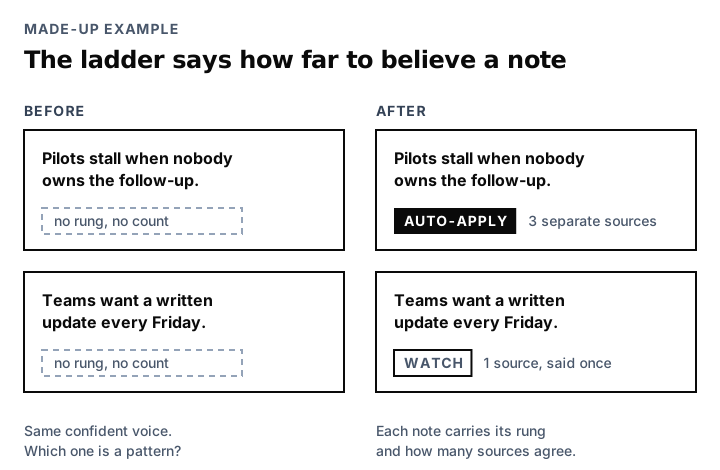
I had spent months teaching the hire not to trust a single sighting of a word. Then I let it draft from notes that never said how many times anything had been seen.
That was the moment. Same ladder, different job. Instead of words, business patterns.
The idea
One observation is a note. Three separate sources make a rule.
The ladder is a way for a second brain to earn what it believes. Every pattern starts at the bottom and climbs only when new, separate evidence agrees. Nothing is binding because I wrote it down, or because it was said loudly, or because it was said often by the same person.
It also works in reverse. When the evidence turns, the rule comes down a rung, and the brain writes down why.
How it works
Every pattern the brain notices lives on one of three rungs.
Watch. One source. It is recorded and never applied. The brain knows about it and does nothing with it.
Suggest. Two separate sources. It is applied, but marked "under review", so whoever reads the output can see it is still on probation.
Auto-apply. Three or more separate sources. Now it is a rule. Drafts follow it, and the critic fails anything that contradicts it.
Four honesty rules stop the ladder from fooling itself.
- The climbing rules live with the data. Each file that tracks a part of the business states its own thresholds. The routine that does the promoting just reads them. Change the file, and the bar changes, in one visible place.
- Each file decides what "separate" means. For my general learnings, a separate source is a different call, a different retro, a different decision or a different person's feedback. For most of my business files, it is a different completed engagement. More on that in the next chapter.
- Demotion is symmetric. Contradicting evidence moves a rule down one rung, and the change is logged in a dated growth log. Rules do not get to be sticky.
- Binding is never unconditional. Every rule carries the conditions it was earned under. Before an auto-apply rule binds a decision, the brain checks that today looks like the conditions it learned in.
  new observation
        |
        v
  +-----------+   1 separate source
  |   WATCH   |   recorded, never applied
  +-----------+
        |  2nd separate source
        v
  +-----------+   2 separate sources
  |  SUGGEST  |   applied, marked "under review"
  +-----------+
        |  3rd separate source
        v
  +------------+  3+ separate sources
  | AUTO-APPLY |  binding, still context-checked
  +------------+
        |
        |  contradicting evidence
        v
  down ONE rung + a dated growth-log entry
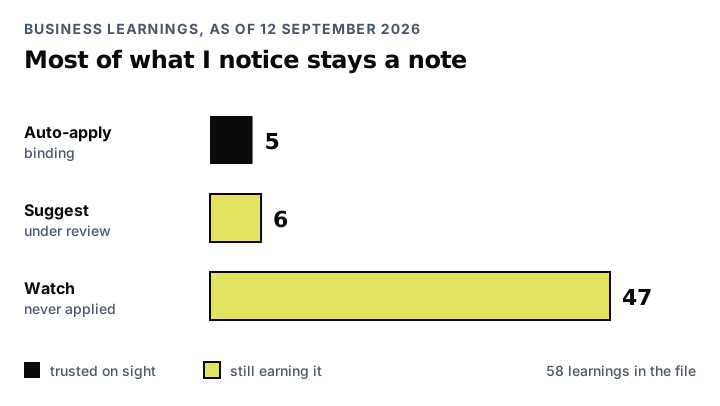
Here is what that looks like in practice. As of 12 September my business learnings file held 58 entries: 5 at auto-apply, 6 at suggest, 47 at watch. Most of what I notice stays a note. That is the point.
One of the earned rules is safe to quote, because it is generic enough to belong to anyone:
"Buying a better tool never fixes a team that keeps failing the same way."
I did not decide that. Three separate sources did... and until the third one arrived, it was not allowed to bind a single draft.
What I learned the hard way
An earned rule that nothing reads is decoration. The brain is meant to copy every suggest and auto-apply rule into a short digest of operating rules that my drafting routines read. Today that digest is still empty. The rules were earned, then never mirrored down. The brain later wrote the lesson about itself: "An unenforced rule is not a rule."
I built the ladder before I had the evidence to climb it. Nine of my ten business files count a different completed engagement as a source. With the work I have finished so far, those nine cannot promote anything yet. I thought the structure was the hard part... but the hard part is time and volume.
The description drifts from the thing it describes. My notes about how the ladder worked and the ladder itself fell out of step more than once. Now the thresholds live in the data file, so there is one place to look.
Try it
evidence-ladderTurn repeated observations into rules only after separate sources agree, and demote them when the evidence turns.Open the repoThe honest limit
The glossary has climbed its own ladder many times over. The business version is built and has earned its first rules, but they live in my general learnings, where a source is easier to come by. Most of the business files are waiting on more completed engagements before anything in them can climb. If you run this with a handful of clients, expect the same patience.
Read this next
Rule 2 is the one I kept putting off: what counts as "separate" when the source is a client, not a call?
Next... What's worth tracking, where you choose the parts of your business the ladder watches. If you skipped it, the ladder started life as the glossary that learns my words.
Building one of these? You don't have to do it alone.